
THE ORIGINS OF “I BANDIERAI DEGLI UFFIZI” AND OF THE ART OF THE FLAG IN FLORENCE
by Claudio Manes Mariani
Historically, flag-waving served a military purpose: it allowed commands and manoeuvres to be signalled over long distances. Over the centuries, this discipline developed into an art in its own right. A standard-bearer needs pride, bearing, technique and athleticism to perform, both in parades and in battle, the movements required by military protocol. In Italy Francesco Ferdinando Alfieri, Master of Arms of the Delia Academy of Padua, codified those movements in his famous treatise La Bandiera (The Flag), published in 1641. The technique described by Alfieri is undoubtedly the “Italian manner” mentioned by Johann Renner and Sebastian Heubler in the New Künstlich Fahnenbüchlein, the first illustrated manual on flag-waving, published in Nuremberg in 1615.
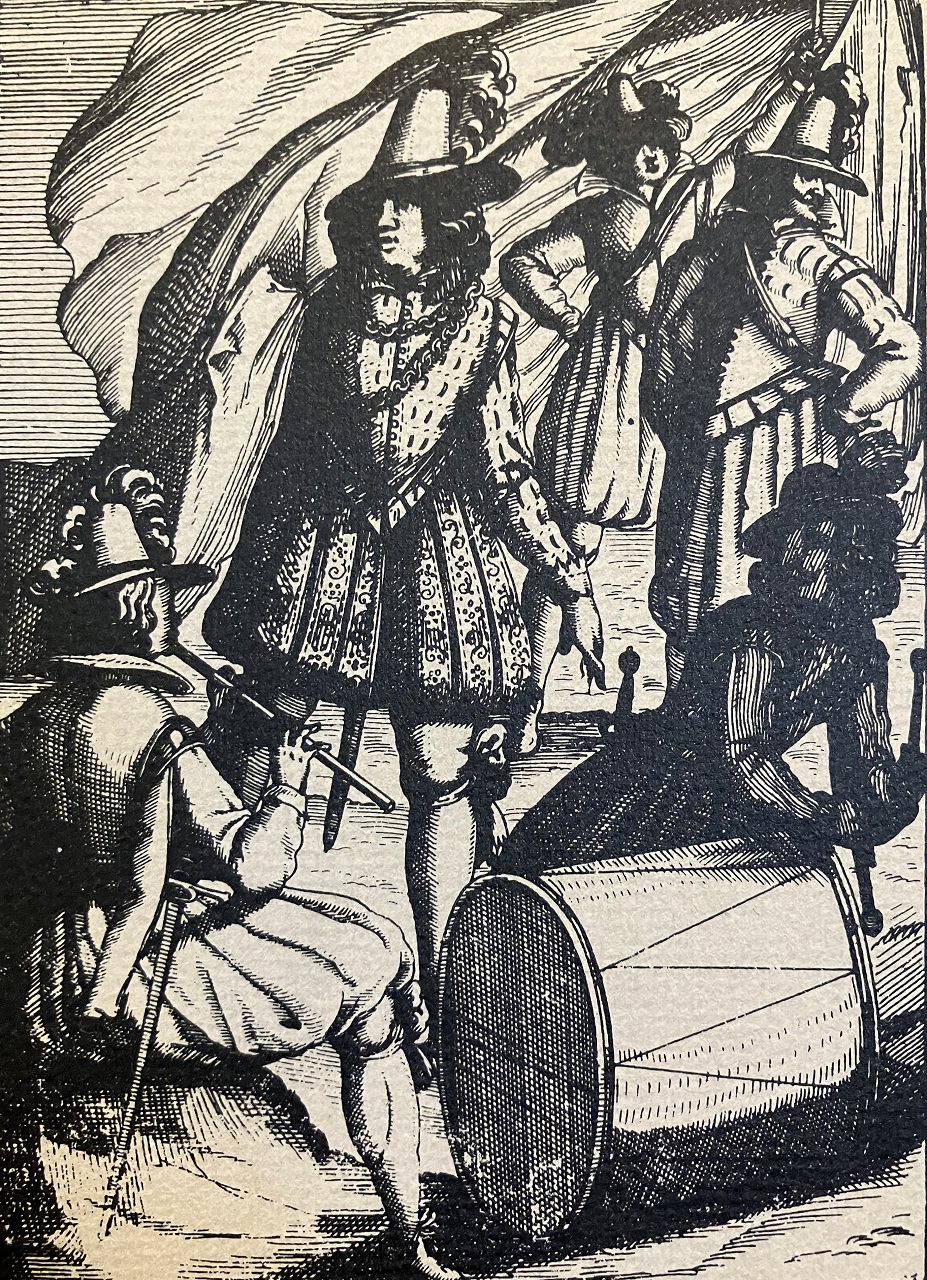 fig. 1 – Image of the title page of the first manual on the art of flag-waving, The New Künstlich Fahnenbüchlein, 1615
The images engraved in these manuals are precise and detailed. However, historical images of flag-waving outside these printed sources are very rare. Still, we have a splendid example here in Florence, in room A18 of the Uffizi Gallery. Here, frescoed on the ceiling, in addition to the large depictions of Florentine festivals, it is possible to see an unmistakable scene in a small tile: two young men each waving two banners, almost as if they were to challenge each other, in the presence of an officer who appears to be a judge. If we think back to the period in which the fresco was painted, the mid-17th century (1656-1666), and the context of the room, dedicated to both noble and popular festivities and games, it is possible to state not only that, in the “city of the lily”, flag waving was a widespread discipline, but also and above all that it was not confined exclusively to a purely military domain, but had assumed (already four centuries ago) its own playful character, assuming also the character of a "sporting" competition - a concept, therefore, which connects us to the current dimension that this art represents today.
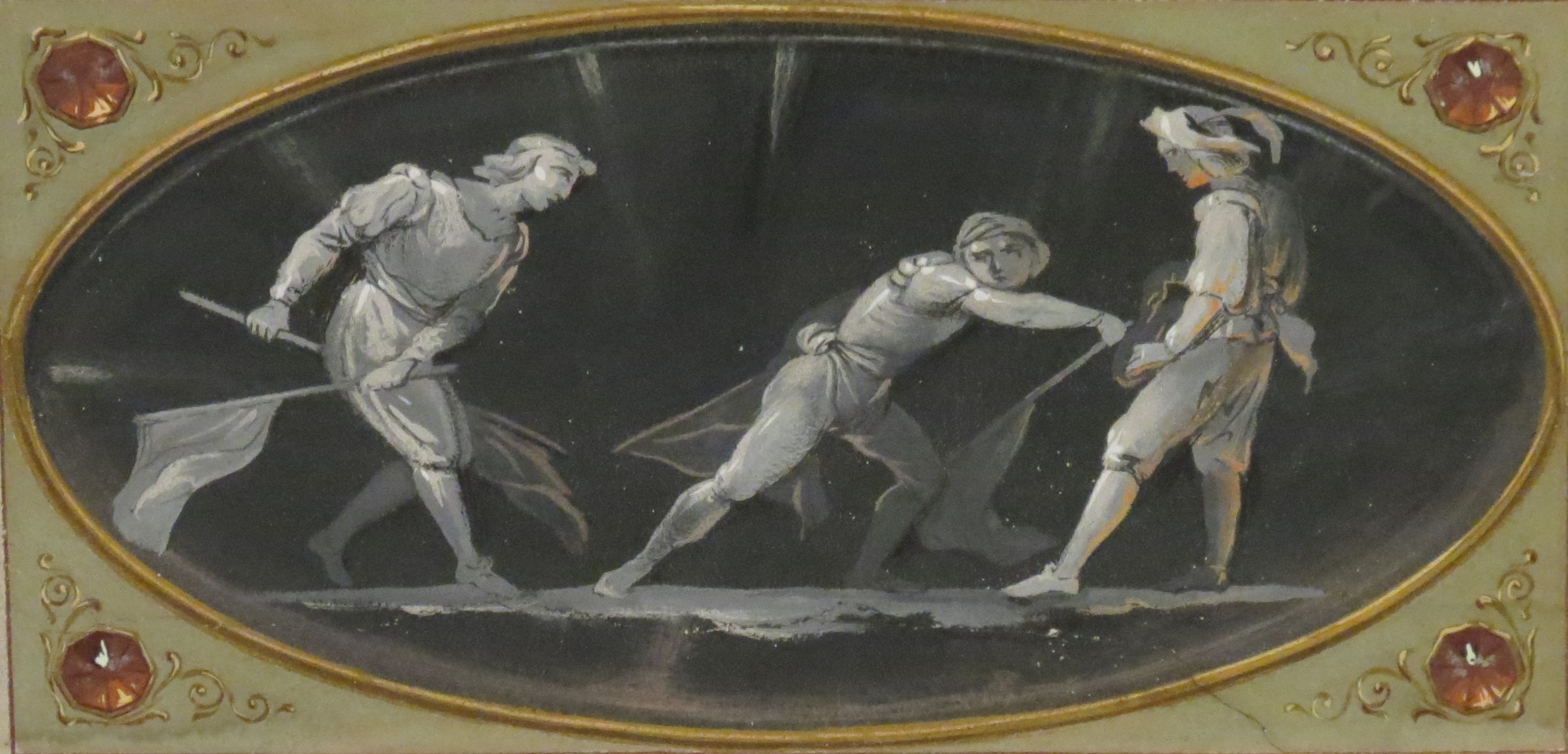 fig. 2 - Ancient flag wavers frescoed on the ceiling of room A18 of the Uffizi Gallery (1656-1666)
Another purely Florentine example, and discovered only recently, is the description of the «Detail […] of the exhibition to His Excellency Marshal Botta Adorno in the new Academy of Chivalric Arts known as the Casino de Nobili of the City of Florence [… ] this day August 14, 1761»: it contains numerous plans for individual and group exercises, featuring standard-bearers (alfieri) dressed in two colours and performing a display in honour of the distinguished guest. Here too, despite the military setting, the flag display was intended to entertain the audience through skilled, coordinated movements. The emphasis was on spectacle rather than military protocol.
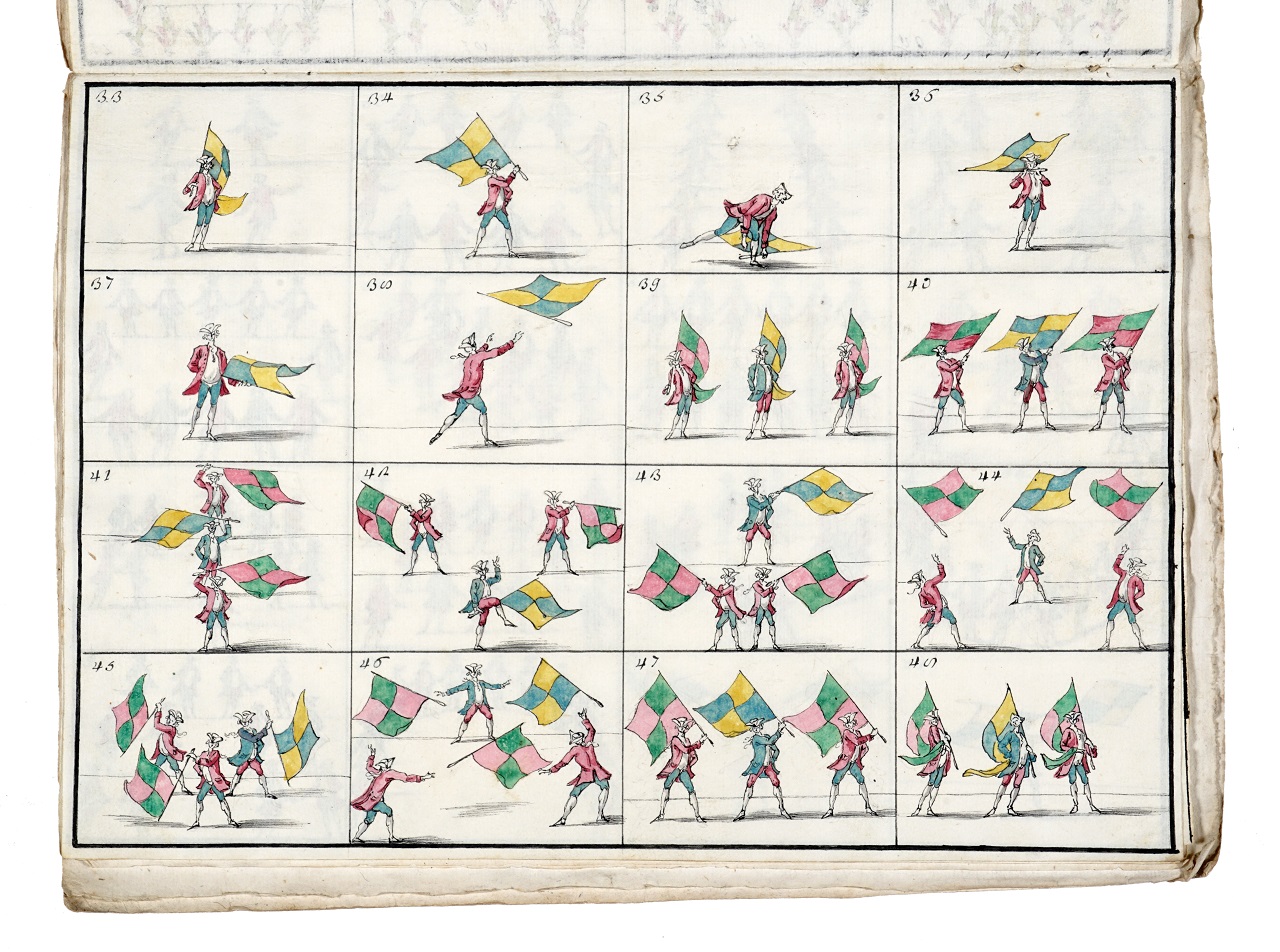 fig. 3 - The flag exercises carried out by Florentine officers on August 14, 1761 (Private collection)
Two isolated examples, a century distant from each other, help to understand how much flag-waving has been a discipline that has been practised for centuries in Florence.
As with many other events, abandoned in the Lorraine period, we had to wait until the 20th century to revive lost traditions, and it was precisely on May 24, 1902, in Piazza Santa Maria Novella, on the occasion of a "costume football" match (in the sense that modern football was played, but in historical clothes), that two "sign jugglers" reappeared in Florence, T. Caciagli and E. Caciagli, of whom we know very little, apart from the fact that they waved their flags during the procession of entry and the half-time of the match. For the occasion, in fact, thanks to the indefatigable Cav. Pietro Gori, promoter of the event, another vanished Florentine tradition was revived: the Potenze or Signorie festeggianti (festive local powers or lordships). These were groups of citizens from individual districts and villages, organised around fictional rulers; rivalries sometimes led to clashes and stone-throwing. And it was the insignia of the Potenza della Graticola (of the San Lorenzo district) that flew that day, bringing the flag waving back to Florence, albeit for an isolated occasion.
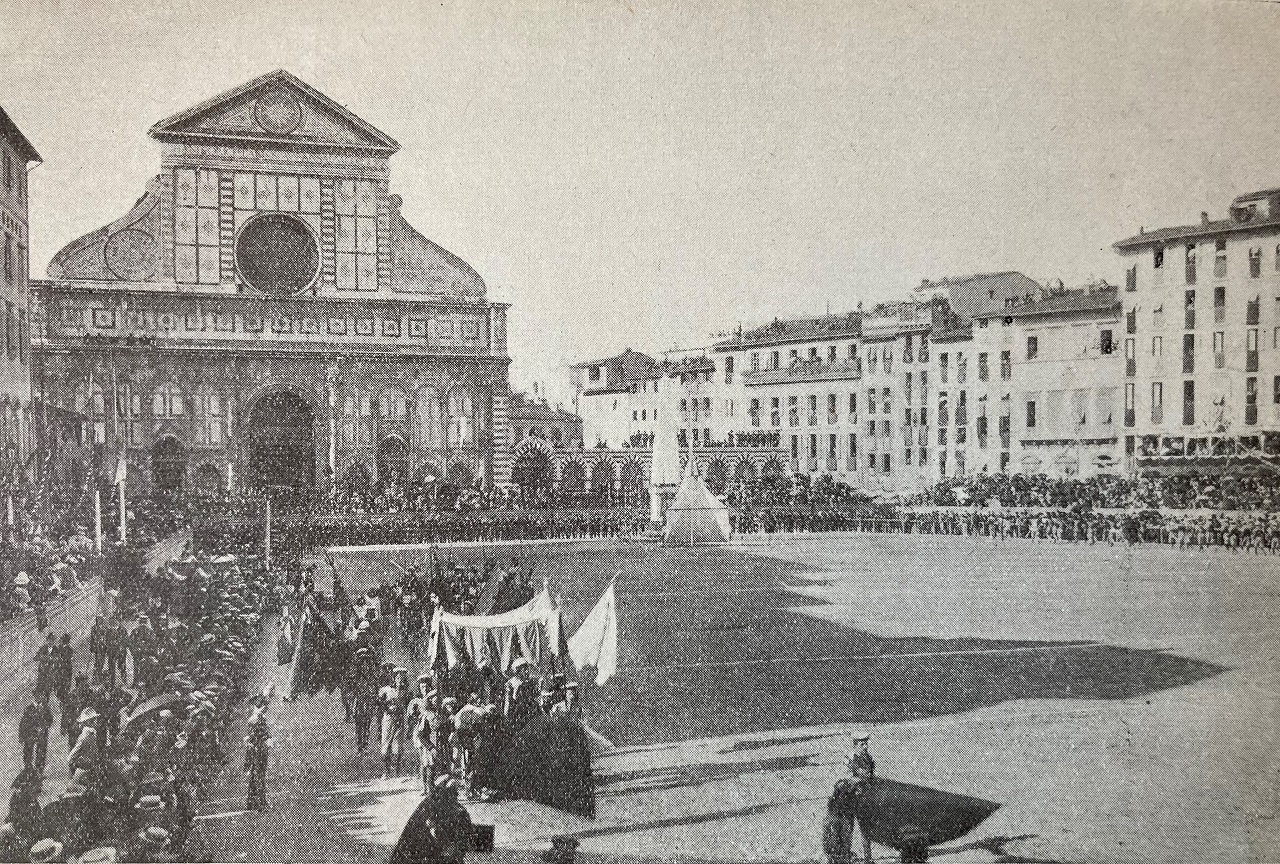 fig. 4A - Piazza Santa Maria Novella, May 24, 1902: the historic “giuocolatori di insegne” (flag performers) can be seen at the head of the procession of the Potenza della Graticola.
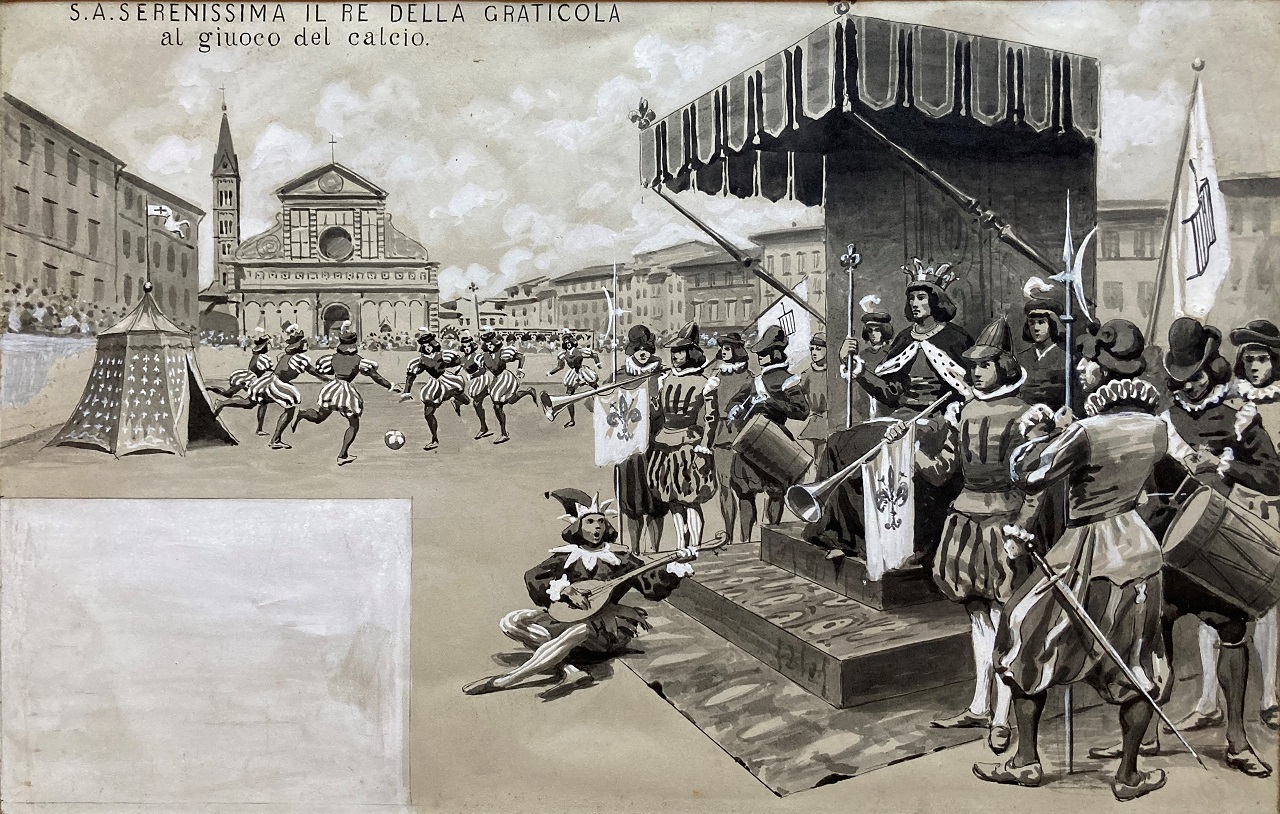 fig. 4B - Drawing in ink and watercolor by Emilio Papini for the printing of the postcards celebrating the 1902 match (Mariani Manes Collection)
According to historical sources, we had to wait until 1938 to witness another flag-raising event in the city. More precisely, it was the standard bearers of the Palio di Siena who performed on May 9 in the Boboli amphitheater on the occasion of Adolf Hitler's visit to Italy. In Siena, the art of the flag has never ceased to be practiced, and it is also thanks to the Sienese standard bearers that this tradition has been handed down over time, up till today.
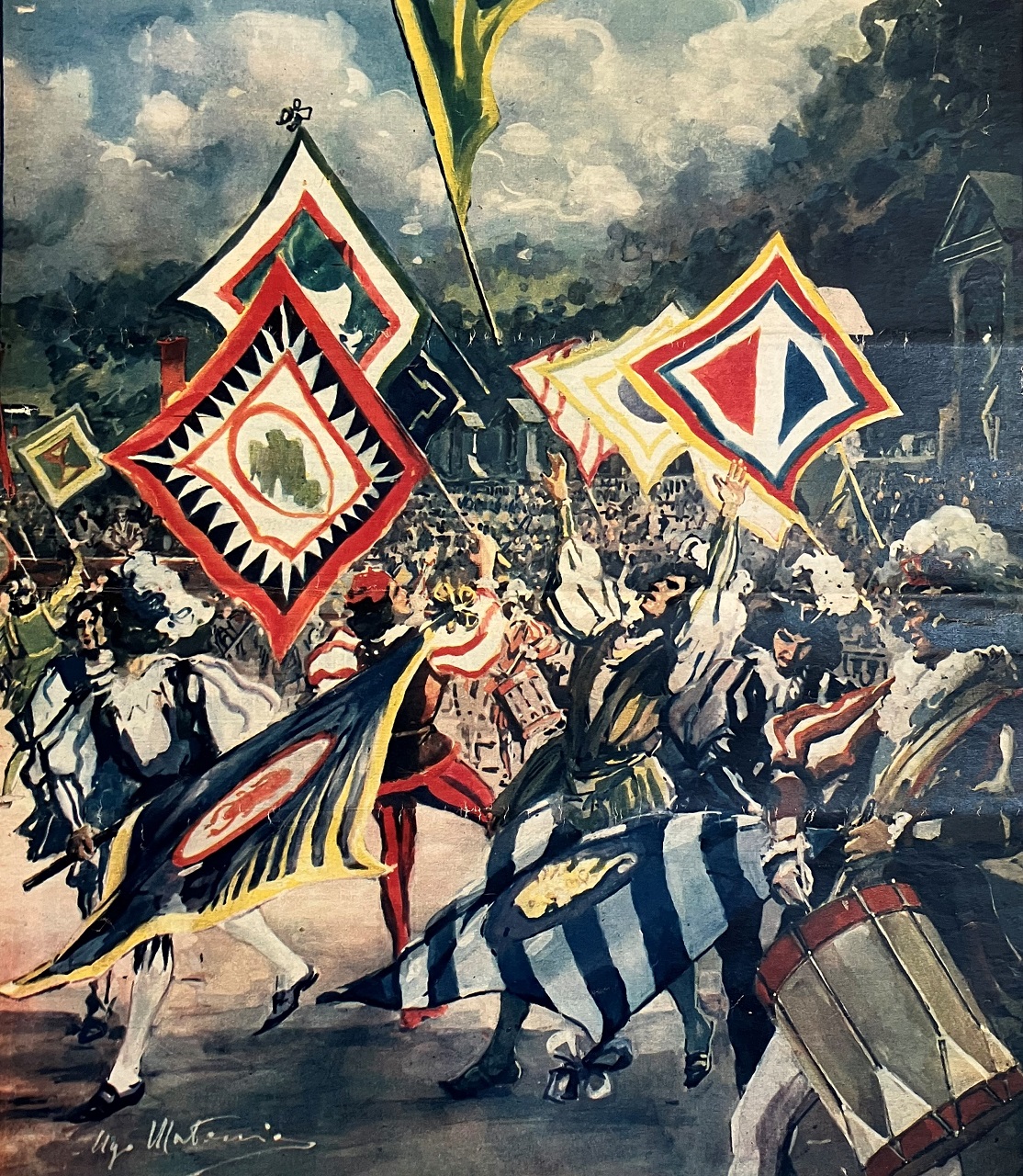 fig. 5 - Drawing by Ugo Matania for the back cover of “Il Mattino Illustrato” of May 16-23, 1938.
After the appearance of the Contrade, in Florence we have to wait for the 1960s to see again the waving of the insignia. It is thanks to the stubborn will of Luciano Artusi, director of the Corteo del Calcio Storico from 1960 to 2015, that the idea of setting up a group of Florentine flag-wavers took off. In the early 1960s, in fact, some boys at the end of the procession began to parade for the matches of the tournament, with costumes that were no longer in use, those of the nuncios of the Arts (nunzi delle Arti), who twirled colored flags, with fantasy designs. The aim was to demonstrate the visual impact that flag-wavers could bring to the procession and to persuade the organisers to take on a commitment that might be demanding, but which Artusi considered essential to the spectacle and to Florence.
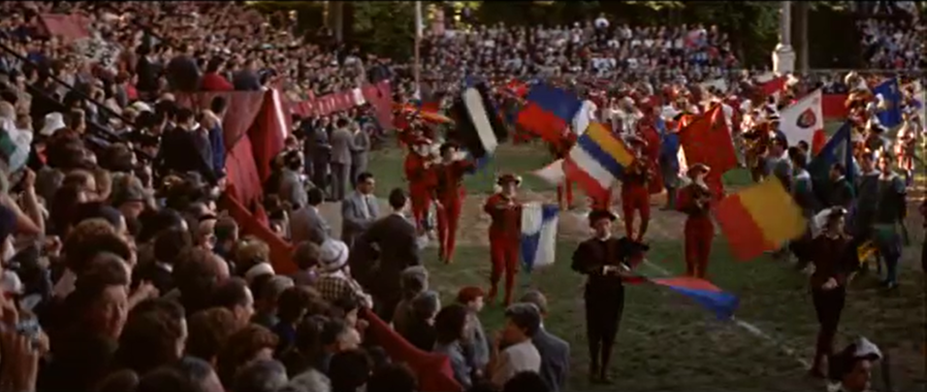 fig. 6 - First attempts to include flag-wavers in the procession in 1961 (from the film Light in the Piazza by Guy Green, 1962)
According to the famous saying "every cloud has a silver lining", it was after the flood of '66, when almost all of the historical costumes had to be redone, irreparably destroyed by the flood of the Arno, that the propitious occasion arrived: the Sartoria Teatrale Fiorentina, at the time directed by Cav. Riccardo Melani, worked with dedication and professionalism to reconstruct the costumes for the entire procession, making some new clothes (16 costumes as a flag-waver and 1 as a drummer) - the first costumes of the Bandierai of the Uffizi. Their shape, in line with the rest of the Florentine football context, but necessarily distinguished by a more simplified and lighter line so as not to hinder the athletes in the movements of the flag-waving, was conceived by Vincenzo Giannetti, an architect with a skilled and expert hand, for decades commissioned by the Municipality of Florence to draw the sketches for the clothes of the Procession, and therefore the most suitable person to create new costumes, among other things without having a precise historical-iconographic reference, but using his creativity and his experience. The number of costumes was no coincidence: the principal Magistracies, or Uffizi, that administered the Florentine Republic numbered sixteen, each with its own coat of arms. Artusi chose them as symbols to put on the flags, after having found the drapes that reproduced them in abandoned warehouses and were labeled as "fake" flags. But where did they come from? Officially, the Magistracies were listed among the participants in the Procession only in 1940 under the name “Bandierai degli Uffizi”; however, these members were standard-bearers rather than flag-wavers. Historical photographs suggest that, as early as 1936, sixteen standard-bearers carrying the emblems of the Magistracies marched alongside the Arts group. Because reporters were often unfamiliar with this distinction, they were usually assumed to belong to the group associated with the “fake” flags.
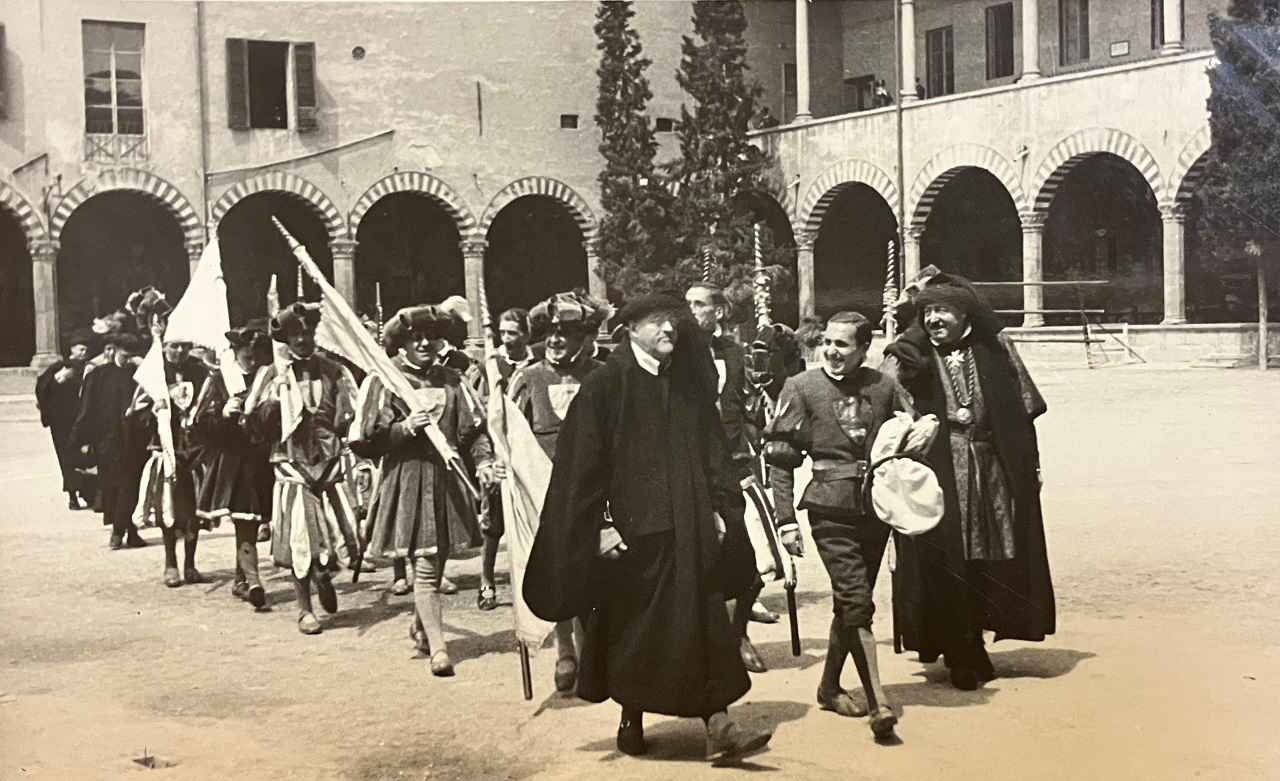
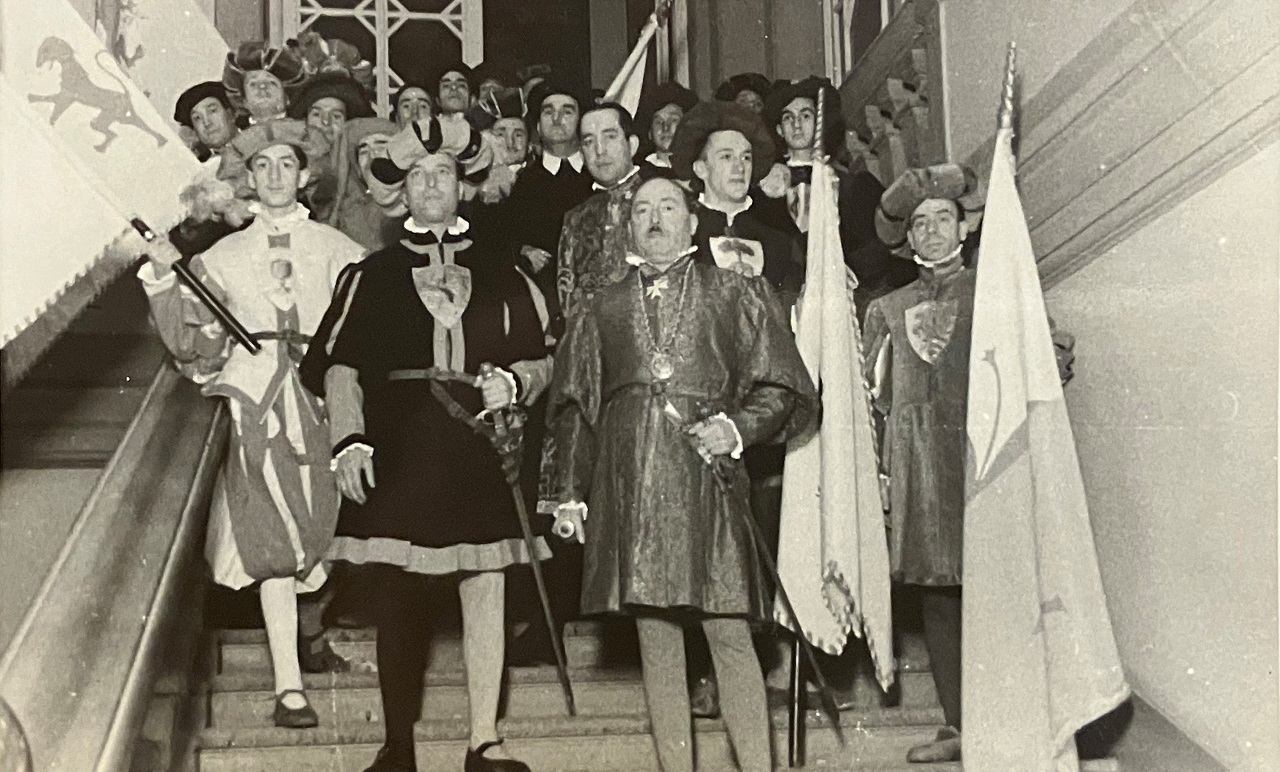 fig. 7A + 7B - Mid-1930s, the first group of Gonfalonieri delle Magistrature parades together with the Arts (Mariani Manes Collection)
These banners continued to parade even after the war, as proved by some images from the 1950s, at least until 1957. Another sixty years would pass before this group appeared again: in fact, in 2017, on the initiative of Filippo Giovannelli, the current Director of the Corteo della Repubblica Fiorentina and Calcio Storico, the "Gonfalonieri delle Magistrature" were (re)created, with costumes directly inspired by Vasari, to highlight the heraldry of each Magistracy within the Procession.
The Uffizi standards had already been brought back to life through the costumes of flag-wavers and drummers after the flood. The next challenge was finding people willing to wear them and putting together a flag-waving performance at short notice. In 1968, the “Sbandieratori Borghi e Sestrieri Fiorentini”, founded three years earlier in Figline Valdarno, became a potential partner. That group stood out for its ability and respect for tradition and, therefore, constituted the ideal partner-team to wave the flag during the Calcio Storico tournament. This collaboration took place that year, and lasted for five years, after which a group made up of Florentine boys was formed.
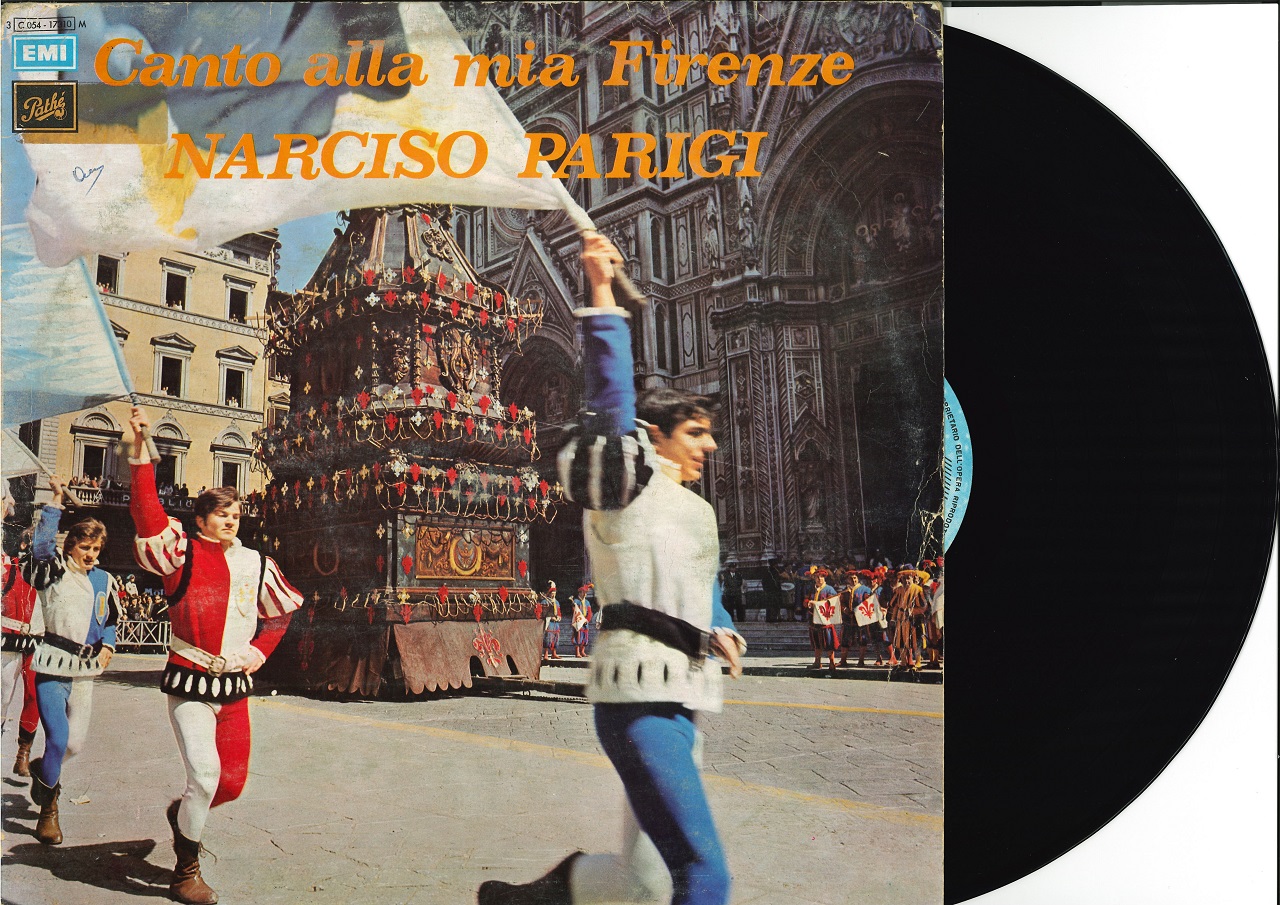 fig. 8 - I Bandierai degli Uffizi of Figline perform on the occasion of the 1972 Scoppio del Carro (from the record sleeve Canto alla mia Firenze by Narciso Parigi, 1973)
On 2 March 1973, Luciano Artusi established the group’s first formation: one drummer and four flag-wavers. Within a year, it had grown to sixteen members. The group became a leading presence in Italian flag-waving and has carried an authentic image of Florentine culture around the world. This exhibition traces the many events that shaped the first fifty years of the Bandierai degli Uffizi.
The Marzocco and Marzocchino Cups
‘Marzocco’ Cup
The Marzocco Cup is a four-team competition among flag-waving groups. In most editions, it has been held on 1 May in one of Italy’s most evocative settings for medieval and Renaissance historical reenactments: Piazza della Signoria in Florence. The names Marzocco and Marzocchino come from the Marzocco, a historic symbol of popular power represented as a lion holding, in its right paw, a shield bearing a red Florentine lily on a white field.
The Marzocco Cup began in 1983, paused from 1991 to 1999, and resumed in 2000. The coveted prize of this tournament is a trophy depicting the same Marzocco sculpted by Donatello. A large-scale replica can be admired in Piazza della Signoria. A panel of experts scores the teams in two events: the small-team and large-team performances. The best overall group also receives a smaller trophy bearing the Marzocco. The musicians also play an important role in determining the winners, performing the piece “Armido Morellato”. Two further prizes are awarded: the group that best respects the historical context receives the “Leonardo Artusi” prize, while the group that receives the greatest appreciation from the public receives the “Filippo Galli” critics’ prize.
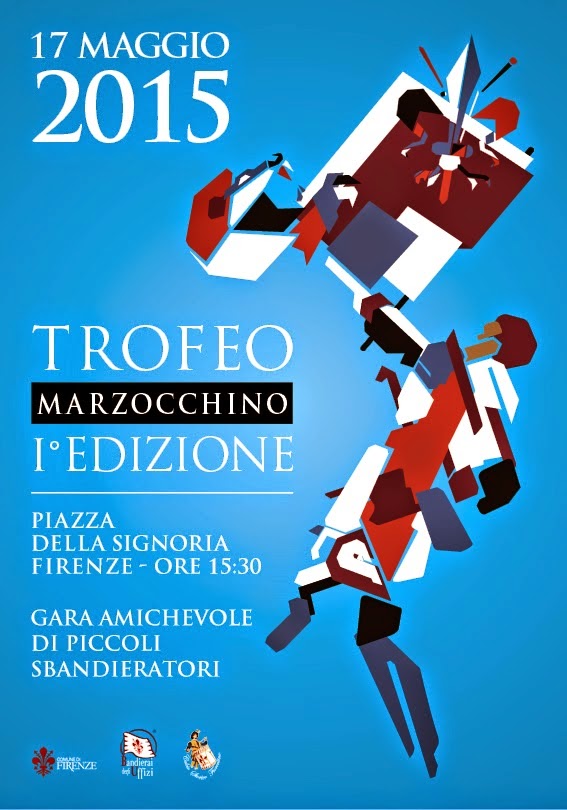
Since 2015, Florence has also hosted the Marzocchino Cup, a friendly competition for flag-wavers and musicians under the age of 14. In this event, our “Zanzare” (“mosquitoes” in Italian, the nickname for the group’s flag-wavers and musicians under 14) compete against other young flag-wavers and musicians from Italian cities, bringing with them the traditions they have learned in the group. The competition evaluates the small-squad performance, the large-squad performance and, of course, the musicians. Over the years, many Italian groups have taken part and won:
 I - MARZOCCO CUP 12 JUNE 1983 - Giardino di Boboli
Firenze - Bandierai degli Uffizi (WINNERS)
Sbandieratori Petroniani - Bologna
Sbandieratori di Volterra (PI)
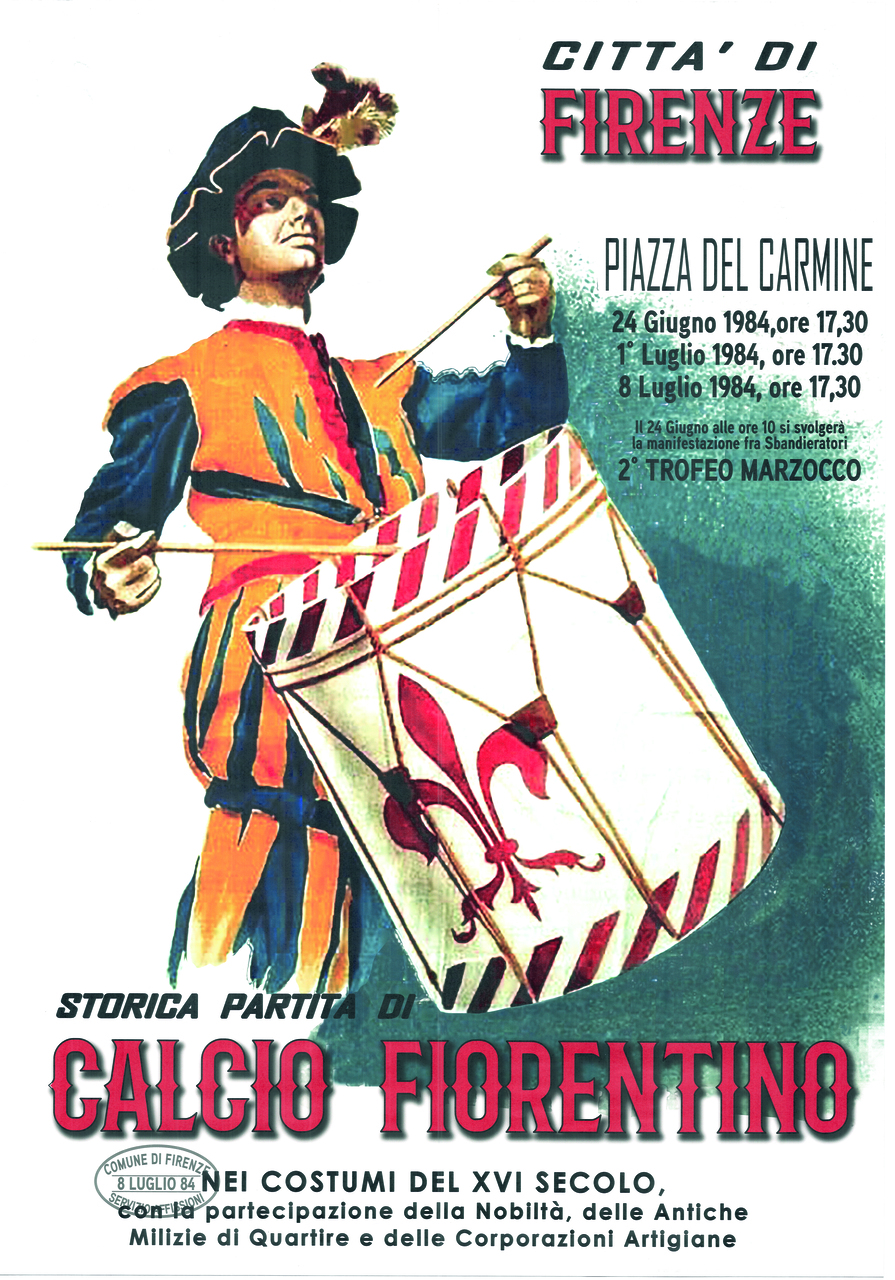
II - MARZOCCO CUP 24 JUNE 1984 - Piazza del Carmine
Firenze - Bandierai degli Uffizi
Sbandieratori Petroniani - Bologna (WINNERS)
Sbandieratori di Torre di Ripa di Versilia (LU)
III – MARZOCCO CUP 28 APRIL 1985 - Piazza della Signoria
Firenze - Bandierai degli Uffizi (WINNERS)
Sbandieratori di Ferrara
Gruppo Sbandieratori Città di Narni (TR)
IV - MARZOCCO CUP 1 MAY 1986 - Piazza della Signoria
Firenze - Bandierai degli Uffizi (WINNERS)
Gruppo Sbandieratori Città di Narni (TR)
Sbandieratori di Querceta - Seravezza (LU)
V – MARZOCCO CUP 1 MAY 1987 - Piazza Santa Croce
Firenze - Bandierai degli Uffizi
Sbandieratori Petroniani - Bologna (WINNERS)
Sbandieratori Rione Verde - Faenza (RA)
Sbandieratori di Volterra (PI)
VI - MARZOCCO CUP MAY 1988 - Piazza Santa Croce
Firenze - Bandierai degli Uffizi (WINNERS)
Sbandieratori ‘Nzegna - Carovigno (BR)
Sbandieratori “A.S.T.A.” del Palio di Asti - Asti
Sbandieratori di Motta Sant’Anastasia (CT)
VII – MARZOCCO CUP 1 MAY 1989 - Piazza Santa Croce
Firenze - Bandierai degli Uffizi (WINNERS)
Sbandieratori di Fossano (CN)
Sbandieratori di Camerino (MC)
Sbandieratori di San Marino (RSM)
VIII - MARZOCCO CUP 1 MAY 1990 - Piazza del Duomo
Firenze - Bandierai degli Uffizi (WINNERS)
Sbandieratori di Massa Marittima (GR)
Sbandieratori di Volterra (PI)
Sbandieratori di Sansepolcro (AR)
IX - MARZOCCO CUP 6 MAY 2000 - Piazza della Signoria
Bandierai degli Uffizi - Firenze (WINNERS)
Sbandieratori di Arezzo
Sbandieratori di Ascoli Piceno
Sbandieratori Rione Santa Caterina - Asti
X – MARZOCCO CUP 5 MAY 2001 - Piazza della Signoria
Bandierai degli Uffizi - Firenze (WINNERS)
Sbandieratori di Conegliano Veneto (TV)
Sbandieratori di Fabriano (AN)
Sbandieratori di San Gemini (TR)
XI - MARZOCCO CUP 18 MAY 2002 - Piazza della Signoria
Bandierai degli Uffizi - Firenze (WINNERS)
Sbandieratori di Castiglion Fiorentino (AR)
Sbandieratori di Pescia (PT)
Sbandieratori di Servigliano (FM)
XII - MARZOCCO CUP 10 MAY 2003 - Piazza della Signoria
Bandierai degli Uffizi - Firenze
Sbandieratori di Gualdo Tadino (PG)
Sbandieratori di Massa Marittima (GR) (WINNERS)
Sbandieratori di Torrita di Siena (SI)
XIII – MARZOCCO CUP 8 MAY 2004 - Piazza della Signoria
Bandierai degli Uffizi - Firenze (WINNERS)
Sbandieratori di Fabriano (AN)
Sbandieratori di Piansano (VT)
Sbandieratori di Sant'Elpidio a Mare (AP) (ABSENT)
XIV - MARZOCCO CUP 2005 – NOT COMPETED
XV – MARZOCCO CUP 2006 – NOT COMPETED
XVI – MARZOCCO CUP 2007 – NOT COMPETED
XVII - MARZOCCO CUP 10 MAY 2008 - Piazza della Signoria
Sbandieratori Città di L’Aquila (WINNERS)
Sbandieratori Petroniani - Bologna
Sbandieratori di San Marino (RSM)
*The Bandierai degli Uffizi did not compete, in honour of the group’s 35th anniversary.
XVIII - MARZOCCO CUP 23 MAY 2009 - Piazza della Signoria
Bandierai degli Uffizi - Firenze (WINNERS)
Sbandieratori Rione Cattedrale - Asti
Sbandieratori di San Gemini (TR)
Sbandieratori e Musici "Brunoro II" - Forlimpopoli (FC)
XIX - MARZOCCO CUP 15 MAY 2010 - Piazza della Signoria
(Cancelled because of rain)
Bandierai degli Uffizi - Firenze
Sbandieratori Città de la Cava - Cava de’ Tirreni (SA)
Bandierai e Musici di Castel San Barnaba - Scarperia (FI)
Sbandieratori “A.S.T.A.” del Palio di Asti - Asti
XX - MARZOCCO CUP 1 MAY 2011 - Piazza della Signoria
Bandierai degli Uffizi - Firenze (WINNERS)
Sbandieratori Città de la Cava - Cava de’ Tirreni (SA)
Sbandieratori e Musici Città di Legnano (MI)
Bandierai e Musici di Castel San Barnaba - Scarperia (FI)
XXI - MARZOCCO CUP 1 MAY 2012 - Piazza della Signoria
(Cancelled because of rain)
Bandierai degli Uffizi - Firenze
Sbandieratori "Leone Rampante" - Cori (LT)
Sbandieratori e Musici della Città dei Candelieri - Sassari
Selezione Sbandieratori Associazione Palio di Feltre
XXII – MARZOCCO CUP 1 MAY 2013 - Piazza della Signoria
Bandierai degli Uffizi - Firenze
A.S.T.A. - Sbandieratori del Palio di Asti
Sbandieratori "Leone Rampante" di Cori (LT)
Sbandieratori e Musici della Città dei Candelieri - Sassari
Selezione Sbandieratori Associazione Palio di Feltre - Feltre (BL)
Sbandieratori e Musici città di Amelia (TR)
Sbandieratori e Musici Maestà della Battaglia - Quattro Castella (RE) (WINNERS)
Sbandieratori di Santa Maria al Pozzolo - Cerreto Guidi (FI)
XXIII - MARZOCCO CUP 1 MAY 2014 - Piazza della Signoria
Bandierai degli Uffizi - Firenze (WINNERS)
Sbandieratori del Cigno Nero di Rivoli - Collegno (TO)
Sbandieratori di Velletri (RM)
Sbandieratori di San Marino (RSM)
Sbandieratori di San Quirico d'Orcia (SI)
Sbandieratori di San Gemini (TR)
XXIV – MARZOCCO CUP 1 MAY 2015 - Piazza della Signoria
Bandierai degli Uffizi - Firenze
Sbandieratori e Musici Maestà della Battaglia - Quattro Castella (RE) (WINNERS)
Sbandieratori della Contrada della Cerva - Noale (VE)
Sbandieratori di Soriano Nel Cimino (VT)
XXV - MARZOCCO CUP 1 MAY 2016 - Piazza della Signoria
Bandierai degli Uffizi - Firenze (WINNERS)
Sbandieratori Santa Maria al Pozzolo - Cerreto Guidi (FI)
Sbandieratori e Musici "Brunoro II" - Forlimpopoli (FC)
Sbandieratori Carbium - Calvi dell’Umbria (TR)
XXVI - MARZOCCO CUP 1 MAY 2017 - Piazza della Signoria
(Cancelled because of rain)
Bandierai degli Uffizi - Firenze
Sbandieratori e Musici Citta' di Lucca (LU)
Sbandieratori e Musici Citta di Giove (TR)
Sbandieratori e Musici del Palio dei Terzieri - Montecassiano (MC)
XXVII – MARZOCCO CUP 1 MAY 2018 - Piazza della Signoria
Gruppo storico Sbandieratori e Musici Città’ di L’Aquila (WINNERS)
Sbandieratori di San Gemini (TR)
Bandierai e Musici di Castel San Barnaba - Scarperia (FI)
Sbandieratori e Musici Citta' di Lucca (LU)
*The Bandierai degli Uffizi did not compete, in honour of the group’s 45th anniversary.
XXVIII – MARZOCCO CUP 1 MAY 2019 - Piazza della Signoria
Bandierai degli Uffizi - Firenze (WINNERS)
Sbandieratori Città di Narni (TR)
Musici e Sbandieratori Città di Bucchianico (CH)
Sbandieratori e Musici Citta di Giove (TR)
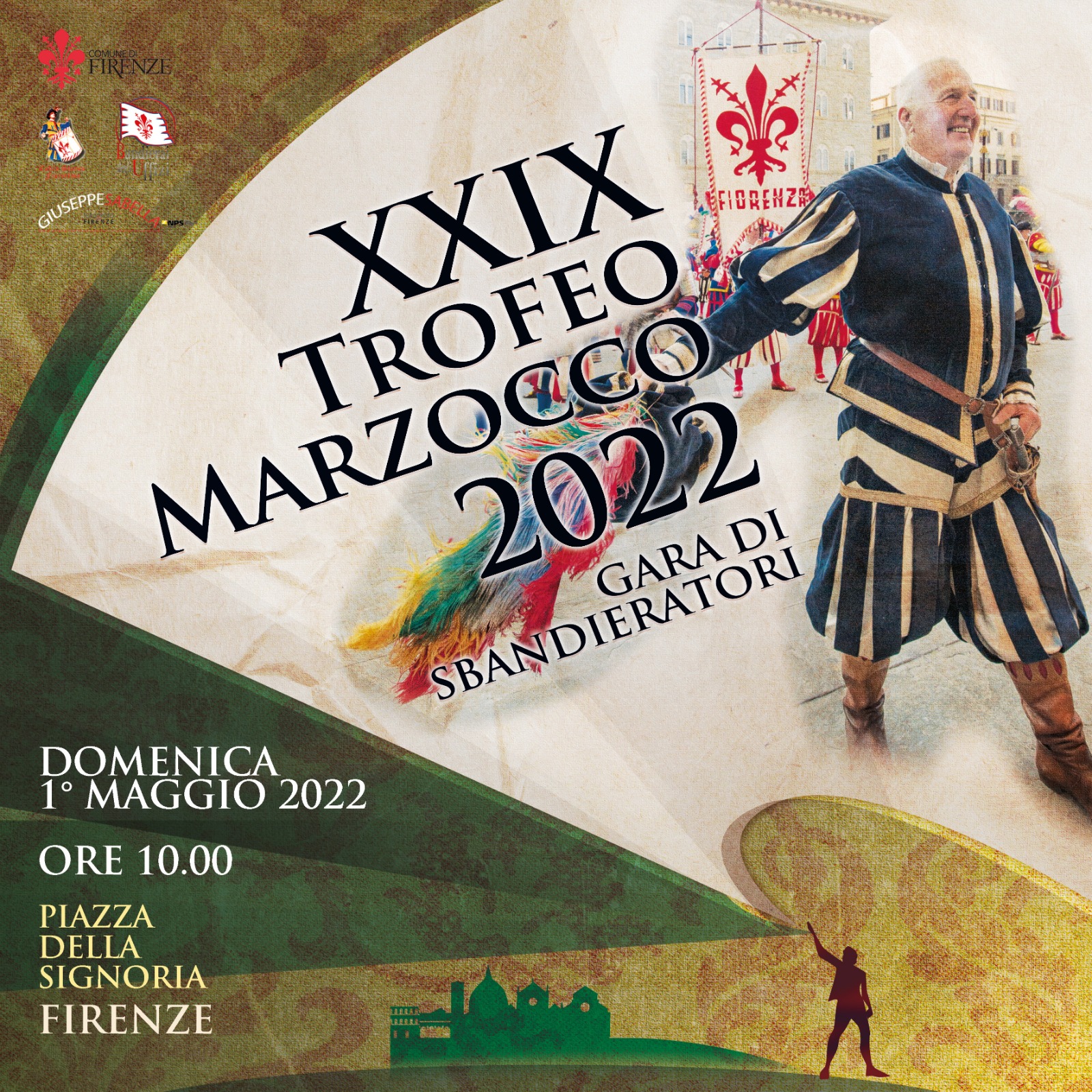
XXIX MARZOCCO CUP 1 MAY 2022 - Piazza della Signoria
Bandierai degli Uffizi - Firenze
Sbandieratori del Quartiere di Canneti - San Quirico d’Orcia (SI)
Sbandieratori Carbium - Calvi dell’Umbria (TR)
*This edition was dedicated to the memory of Gigi Vitali; the trophy was presented to the Vitali family in his honour.
‘Marzocchino’ Cup
MARZOCCHINO CUP
I MARZOCCHINO CUP 17 MAY 2015 - Piazza della Signoria
“Zanzare” dei Bandierai degli Uffizi - Firenze
Piccoli Bandierai di San Gemini (TR)
Sbandieratori di San Marino (RSM)
Sbandieratori di Cerreto Guidi (FI)
II MARZOCCHINO CUP 22 MAY 2016 - Piazza della Signoria
(Cancelled)
III MARZOCCHINO CUP 7 MAY 2017 - Piazza San Lorenzo
“Zanzare” dei Bandierai degli Uffizi - Firenze
Sbandieratori di Torrita di Siena (SI)
Sbandieratori Terziere Porta Fiorentina - Castiglion Fiorentino (AR)
Sbandieratori e Musici dei Terzieri Massetani - Massa Marittima (GR)
IV MARZOCCHINO CUP 6 MAY 2018 - Piazza della Signoria
“Zanzare” dei Bandierai degli Uffizi - Firenze
Sbandieratori Carbium - Calvi dell’Umbria (TR)
Sbandieratori Terziere Porta Fiorentina - Castiglion Fiorentino (AR)
V MARZOCCHINO CUP 5 MAY 2019 - Piazza della Signoria
(Cancelled because of rain)
“Zanzare” dei Bandierai degli Uffizi - Firenze
Piccoli Bandierai di San Gemini (TR)
Giovani Leoni del Gruppo Sbandieratori e Musici Borgo Viatosto Junior - Asti