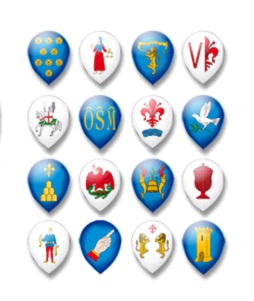

In the historical procession of the Florentine Republic, as in the early editions of Calcio Storico Fiorentino, the insignia of the Magistrature were an important part of Florence’s heraldic tradition of the period. In 2001, when the flag-wavers entrusted with carrying these insignia replaced the traditional flags with more theatrical ones featuring a red lily at the centre, these important symbols of the historical re-enactment disappeared from the procession.
Since the 2017 edition of the San Giovanni Tournament of Calcio Storico Fiorentino, the insignia have returned to the procession. Sixteen Gonfalonieri carry flags bearing the coats of arms and wear historical costumes directly inspired by Giorgio Vasari’s paintings in Palazzo Vecchio.
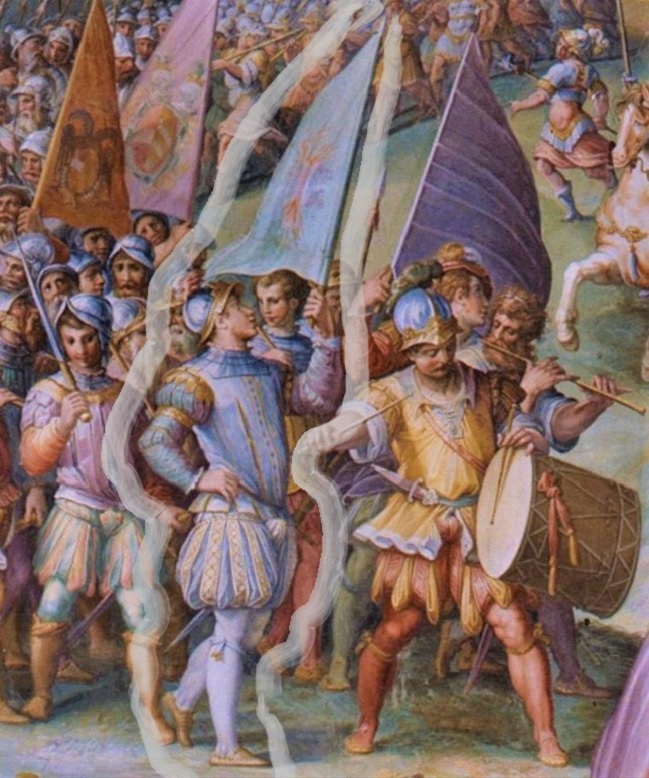
The costumes were inspired by a detail from the fresco on the western side of the Salone dei Cinquecento, depicting “Maximilian of Austria attempting to conquer Livorno”. The figure chosen as a model is the standard-bearer in the centre of the scene, immediately behind the drummer, marching at the head of the procession with the other soldiers.
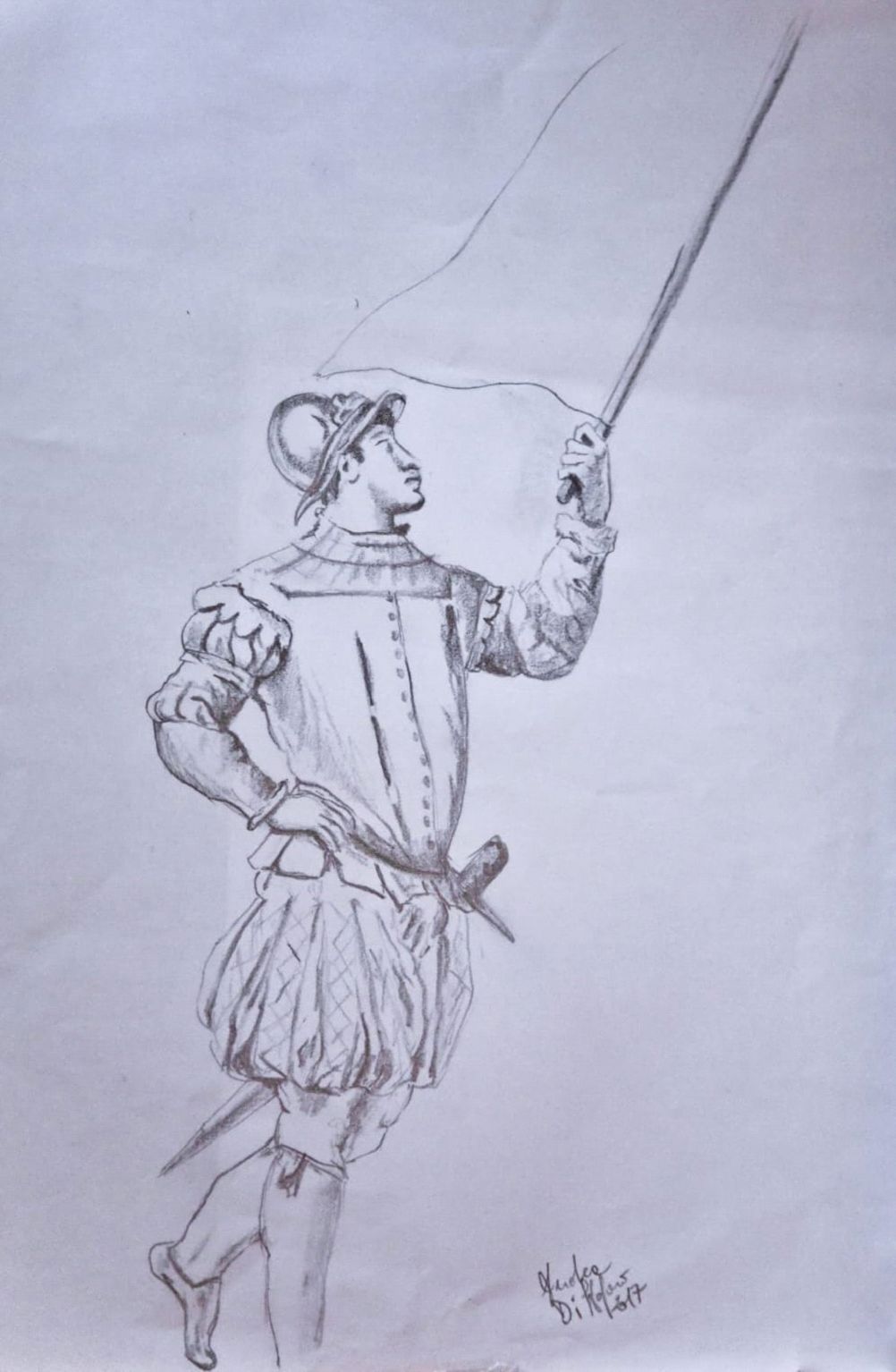
Andrea Di Stefano created a sketch capturing the essential features of the figure. The tailoring workshop then produced sixteen lightweight velvet costumes with gold trim, following a coherent historical design: an edged jacket with a front fastening and two separate longitudinal panels lined with satin; gathered, puffed sleeves, also lined with satin and secured with a gold band, with a tabbed hem; breeches puffed above the knee with satin-lined slashes; a feathered cap with gold edging; tights and shoes with “bear-paw” eyelets.
The costume is completed by a leather belt carrying a short sword, formally presented to the group as part of its equipment on 21 November 2021 in Piazza della Signoria.
The insignia of the Magistrature
The 16 standards of the Gonfalonieri of the Magistrature are divided into two groups: eight with blue backgrounds and eight with white backgrounds.
Each flag measures 120 × 140 cm and has alternating red and white edging. It is hand-painted on both sides with its respective heraldic emblem. A sleeve on the left side allows it to be inserted and secured to a wooden pole 3 cm in diameter, topped with a gold “tortiglione” (twisted finial).